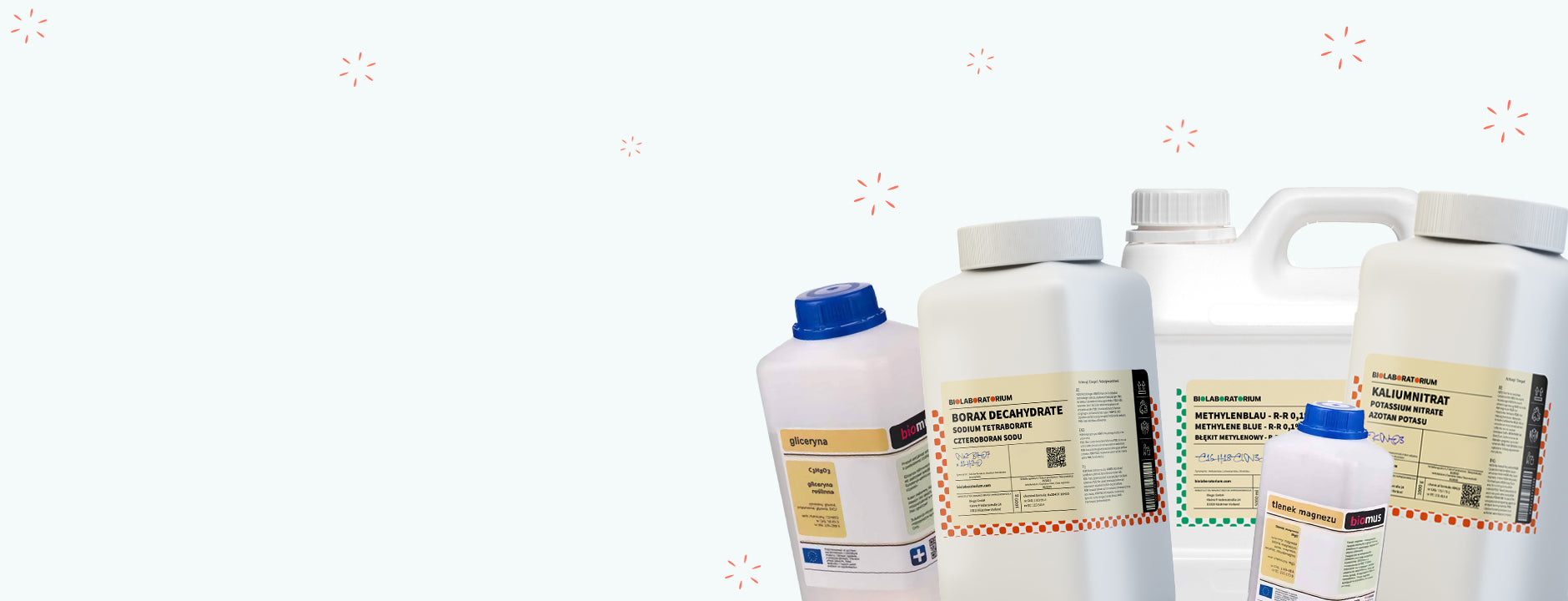






Optimizing Storage for Bulk Reagents: Best Practices for Containers from 1 kg

In industrial chemistry, large-scale analysis, and synthesis processes, bulk reagents in containers from 1 kg are the economic standard. However, as packaging sizes increase, so does the responsibility for storage. A classic example of a moisture-sensitive and temperature-critical bulk material is acetylsalicylic acid (C9H8O4, CAS No. 50-78-2, EC No. 200-064-1).
Whether as a starting material for chemical syntheses, as a pharmaceutical raw material, or as an additive in technical processes – only an optimized storage strategy ensures the manufacturer's specifications are maintained throughout the entire shelf life.
The challenge with organic bulk materials
Powdered organic compounds such as acetylsalicylic acid are prone to physical and chemical changes when handled improperly in large containers. The material's main enemies are moisture, light, and pressure load within the packaging.
For example, if ambient humidity penetrates an opened 1 kg container, it can lead to serious effects:
-
Hygroscopic reactions: The powder absorbs moisture, tends to clump (caking), and loses its flowability. This significantly hinders precise automatic dosing in the process.
-
Premature degradation: Moisture, combined with unsuitable temperatures, can trigger hydrolytic processes that reduce the purity of the reagent.
Best practices: How to optimize your bulk material storage
To consistently ensure the quality of reagents in the kilogram range, the following standards should be established in storage and logistics management:
1. Precise climate control
Acetylsalicylic acid requires strict adherence to room temperature. The optimal storage range is consistently between 15 °C and 25 °C. Temperature fluctuations should be avoided as they can promote condensation inside the container.
2. Consistent moisture and light protection
Storage areas must be dry and dark. Bulk materials should never be exposed to direct sunlight, as UV light can accelerate photochemical reactions. After each partial removal, the container must be immediately sealed airtight and moisture-proof.
3. Proper container management
For containers from 1 kg, the first-in-first-out (FIFO) principle must be strictly followed. Additionally, opened containers should be declared separately in storage to minimize exposure time to ambient air.
Biolaboratorium
Discover the full range now and find your personal favorite product!
Versatile potential in professional processing
As a high-purity chemical raw material, acetylsalicylic acid is a sought-after building block in various industries due to its specific properties:
-
Chemical industry: Use as an intermediate or reagent in organic synthesis processes and for the production of downstream chemical compounds.
-
Pharmaceutical industry: Further processing as an active pharmaceutical ingredient (API) in analgesic, anti-inflammatory, and antipyretic formulations, as well as in thrombosis prophylaxis.
-
Special applications: Use as a functional component in cosmetic formulations (e.g., skin care) or as a specific preservative in regulated systems.
📦 Safety instructions & labeling requirements (CLP)
Handling bulk reagents in the kilogram range requires trained personnel and strict adherence to occupational safety regulations in accordance with the Safety Data Sheet (SDS).
Hazard and safety information: When transferring or dosing, care must be taken to avoid inhaling dust. The product must be handled according to the legal markings on the packaging.
Access protection: Chemical reagents must always be stored in a tightly sealed original container and completely inaccessible to children, animals, and unauthorized persons.
Legal disclaimer
For professional use only. This product is intended as a chemical reagent exclusively for industrial further processing, for laboratories, and for analytical processes. It is a raw material, not a ready-to-use end product or medication. All manufacturer instructions for storage and handling must be strictly followed.